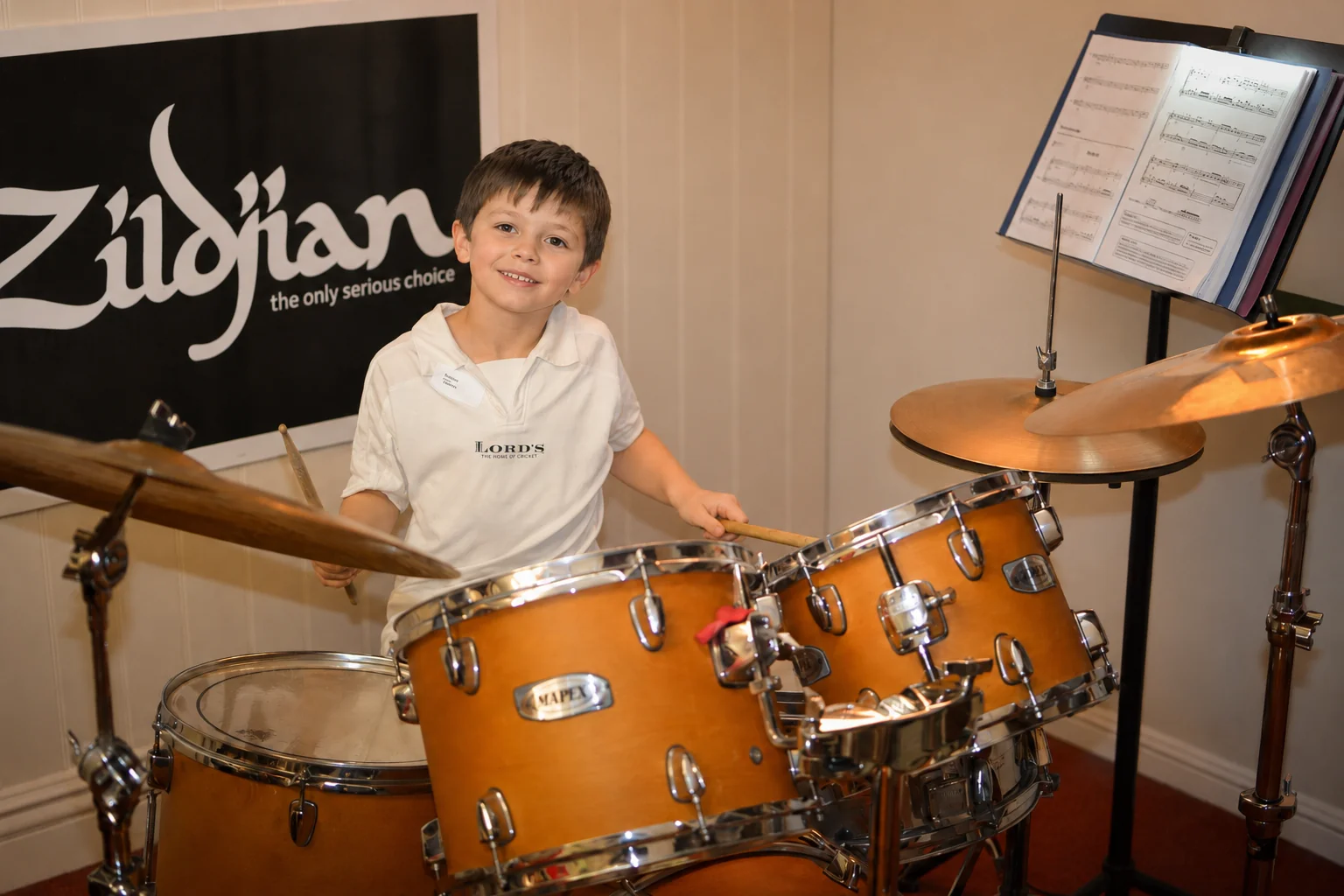
The Benefits of Drumming for Children (Beyond Music)
When parents look into drum lessons for children, they usually picture rhythm and a bit of fun (and yes, plenty of noise). But the benefits of drumming for children reach well beyond music. Learning to play the drums quietly builds focus, coordination, confidence and self-discipline, the kind of skills that help a child in the classroom and in life, not just behind a kit.
Here is what your child really gains from picking up a pair of sticks, and why it is one of the most rewarding things a young person can learn.
A connection to music from across the world
Drumming is one of the oldest and most universal forms of music. From African and Latin rhythms to rock, jazz and pop, drums sit at the heart of musical cultures everywhere. When children learn the drums they do not just learn beats, they connect to a global tradition, explore different styles, and most importantly learn to genuinely enjoy making music.
Focus and self-discipline
Playing a drum kit demands concentration. A child has to keep a steady beat while coordinating hands and feet and listening to what is going on around them. That sustained attention is a workout for the brain, and over time it strengthens a child's ability to focus on a single task. Children also discover that real progress comes from regular practice and attention to detail, which naturally builds patience and discipline that carry over into schoolwork and everyday life.
Coordination and physical development
Few activities engage the whole body the way drumming does. Hands, feet, eyes and ears all work together, often doing different things at once. This develops both fine and gross motor skills, and in particular bilateral coordination, the ability to control both sides of the body together. Researchers note that the neural pathways built through this kind of cross-body movement also support everyday skills like handwriting and sport. Drumming is genuinely physical too, so it burns energy and builds strength, balance and posture along the way.
A brain that works both sides at once
Drumming asks a child to read or recall patterns, keep time, and move all four limbs in coordination, all at the same time. Studies link regular musical practice in children with stronger verbal memory, reading and even maths ability, thanks to the timing, sequencing and pattern recognition involved. It is the sort of rich, multi-sensory activity that helps both halves of the brain communicate more efficiently. None of this is a magic shortcut to top marks, but it is a real and well-supported side benefit of learning an instrument.
Confidence and a healthy outlet
Mastering a new rhythm or playing a full song from start to finish is genuinely empowering for a child. As students improve and perform in front of others, their confidence grows: they do not just try, they achieve. Drumming is also a wonderful emotional outlet. Hitting drums is a safe, physical way to release energy and express feelings, which can be especially valuable for an energetic or sensitive child.
Teamwork and belonging
Drummers rarely play alone. Keeping steady time so others can play, listening, and responding to the band teaches a child to support the people around them. There is something deeply rewarding about a group of people locking into a rhythm together, and it gives children a real sense of belonging. At Planet drum, students work towards performing at our seasonal student concerts, which turns months of practice into a proud, confidence-building moment on stage.
Kids' drum lessons at Planet drum
We have been teaching drum lessons for children in North London since 1997, from The Crypt at St Mary Magdalene Church in Holloway, two minutes from Highbury & Islington station and easy to reach from Islington, Highbury, Finsbury Park and across N1, N5 and N7. Children's lessons start from age 6, are one-to-one and tailored to each child, and grow with them from their very first beat through to graded exams if they want to, since we are a Trinity Rock & Pop and Rockschool exam centre. The best way to see if your child takes to it is to come and try a taster lesson.
Frequently asked questions
Do I need my own drum kit or sticks for my first lesson? No. We can provide sticks and you'll play on our kit. Bring your own sticks if you have them, but there's no need to buy anything to begin.
Will I actually play something in the first lesson? Almost certainly. Most beginners play a simple groove within their first session, which is one of the best parts of starting drums.
Is a first drum lesson suitable for young children? Yes. We teach children and adults, and lessons are pitched to each student's age and level so everyone starts comfortably.
How often should I practise? Short and regular beats long and occasional. Even 10 to 15 minutes on a practice pad most days will move you forward faster than one long weekend session.